Basement Waterproofing vs Water Damage Restoration: Scottdale Guide
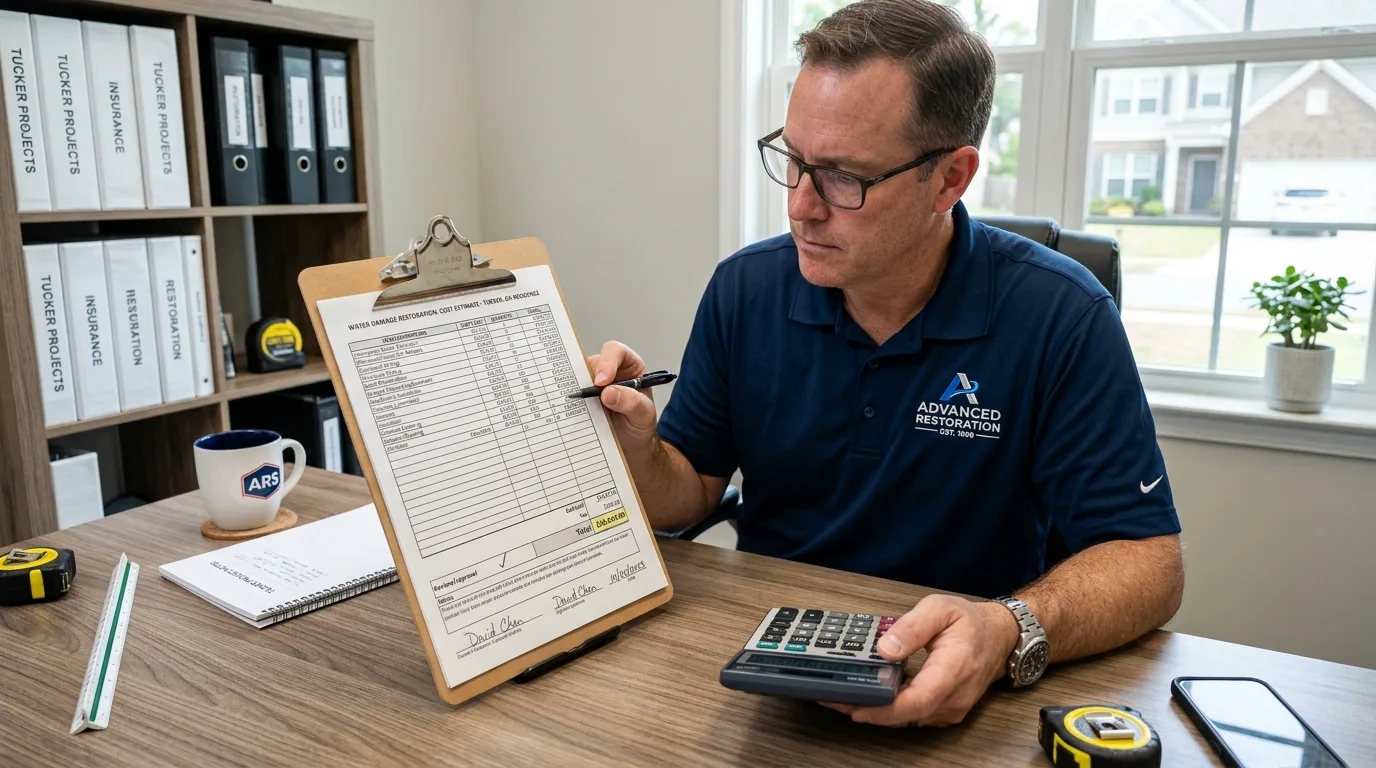
Many Scottdale homeowners encounter the same frustrating scenario: water enters their basement or crawlspace, they call a waterproofing company, have systems installed, and then water enters again the following spring. The reason is usually a misdiagnosis — they needed water damage restoration and the source addressed, but received a waterproofing solution that treated the symptom without fixing the cause.
In this post, we cover the critical differences between waterproofing and water damage restoration in the Scottdale context, when each service is the correct solution, how DeKalb County’s red clay soil affects both approaches, and how to avoid paying for the wrong service after a water event.
Water in Your Scottdale Home — Restoration or Waterproofing?
Get an honest assessment before you spend. Call (877) 698-1311 for a free evaluation.
Why This Distinction Matters in Scottdale
The Piedmont red clay soil throughout DeKalb County creates water pressure against Scottdale foundations that is more persistent than homeowners in sandy-soil regions would experience. After any significant rainfall, this clay remains saturated against foundation walls for several days — creating hydrostatic pressure that can drive water through hairline cracks, mortar joints, and cold joints in foundation walls and slabs. The resulting water intrusion looks identical whether the cause is a one-time event or a chronic pressure condition.
This similarity in appearance leads to one of the most common and expensive mistakes in the Scottdale market: homeowners who have experienced a specific water damage event — a burst pipe, a storm intrusion, a roof leak — are sold waterproofing systems that address the wrong problem. Conversely, homeowners with genuine chronic foundation water infiltration from clay soil pressure sometimes hire a water damage restoration company and receive mitigation services that address the current damage but leave the source condition untreated.
Types / Options: When Each Service Applies
Water Damage Restoration (Active Event Response): The correct service when a specific, identifiable event has caused water intrusion — a pipe burst, a storm that caused roof or structural damage allowing water entry, an appliance failure, or a sewage backup. The service addresses the water that is already in the structure: extraction, structural drying to IICRC moisture targets, mold remediation if necessary, and reconstruction of damaged materials. It does not prevent future water from the same source if the source condition is not corrected.
Basement Waterproofing (Chronic Infiltration Prevention): The correct service when water enters through foundation walls or floors repeatedly, driven by the hydrostatic pressure of saturated clay soil against the foundation. Waterproofing systems — interior drainage channels, sump pumps, exterior membrane coatings, and foundation crack injections — redirect or exclude groundwater-driven infiltration. This is a prevention and management service, not a response to an existing active event.
Both Services Together (Most Complete Solution): The correct approach when a home has experienced an active water damage event AND has a chronic infiltration condition that contributed to the event or that will cause future events without intervention. An honest contractor should clearly identify which elements of the recommended scope address the active damage and which address the chronic condition.
Practical Uses: How to Diagnose Which You Need
- Assess the timing and trigger: Did water enter during a specific identifiable event (storm, pipe burst, appliance failure)? Water damage restoration is the immediate need. Does water appear regularly after heavy rainfall with no specific trigger? The chronic infiltration condition needs assessment.
- Check the location of water entry: Water from a burst pipe or appliance will have a clear origin point inside the structure. Water from chronic hydrostatic pressure typically enters through wall/floor interfaces, cracks in foundation walls, or floor penetrations — and appears progressively worse as rainfall accumulates.
- Look at the water category: Water from a supply line or rain-driven roof entry is clean water (Category 1). Water that enters through foundation walls from saturated soil often picks up contamination and may be Category 2. Water entering from a sewage-adjacent source (floor drains backing up during heavy rain) is Category 3.
- Evaluate crawlspace moisture: In Scottdale’s clay soil environment, crawlspace moisture that persists year-round — not just after specific events — is a sign of chronic infiltration that waterproofing (crawlspace encapsulation, dehumidification system) addresses more effectively than restoration alone.
- Get independent assessments: A water damage restoration company and a waterproofing company will both be selling their respective services. Getting both assessments and comparing their diagnoses of the source condition gives you the most complete picture before committing to either solution.
How It Works: The Combination Approach for Scottdale Homes
For Scottdale homes where both an active event and a chronic infiltration condition exist — which is common in the Lantern Ridge and Cedar Park neighborhoods where clay soil pressure is significant — the correct sequence is: immediate water damage restoration to address the active event and all structural drying requirements; followed by waterproofing assessment and installation during the dry season when the system can be properly installed and tested.
Beginning waterproofing system installation while the structure is still wet from an active event is counterproductive — foundation drainage systems installed in saturated soil without proper drying can trap moisture inside the wall assembly rather than directing it away. The restoration sequence must reach IICRC dry targets before any waterproofing installation begins.
Let's Diagnose the Correct Solution for Your Scottdale Home
Honest assessment — restoration, waterproofing, or both. Call (877) 698-1311.
Cost Factors: Restoration vs. Waterproofing in Scottdale
Water damage restoration in the Atlanta metro area averages $8,546, with a range of $1,874 to $15,960 depending on damage category and scope. Structural drying and water extraction costs are determined by affected area and water category — clean water events cost approximately $7.77 per square foot versus $16.65 for black water events.
Basement or crawlspace waterproofing systems in the DeKalb County market typically run $3,000 to $12,000 depending on the approach: interior drainage systems with sump pumps are generally $5,000 to $10,000; crawlspace encapsulation runs $3,000 to $8,000; exterior excavation and membrane application is the most expensive approach at $8,000 to $15,000. These costs are largely not covered by homeowner’s insurance, which covers the damage from an active event but not the prevention of future chronic infiltration.
Understanding which cost category your situation falls into before you begin spending is the most important financial decision you’ll make after any water entry event in your Scottdale home.
Frequently Asked Questions
My Scottdale crawlspace floods every spring — is that a restoration or waterproofing issue?
Recurring annual flooding at a predictable time (spring storm season) with no specific trigger event is almost always a chronic infiltration condition driven by the clay soil’s hydrostatic pressure during Georgia’s wet spring months. The immediate response — extracting the standing water and drying the crawlspace — is water damage restoration. The long-term solution is crawlspace encapsulation combined with a perimeter drainage system and sump pump. Both are needed; neither alone is sufficient. See our crawlspace drying guide for Scottdale homeowners for the full approach.
Can I deduct waterproofing costs from my water damage insurance claim?
Waterproofing systems installed to prevent future chronic infiltration are generally not covered by standard homeowner’s insurance, which covers sudden and accidental damage rather than preventive improvements. However, if a waterproofing contractor identifies a specific defect — a failed foundation crack repair, for example — that directly caused a covered acute water event, there may be a claim component that covers that specific repair. An insurance adjuster can advise on the specific coverability of any individual repair item. See our insurance claim guide for DeKalb County homeowners for more details.
How does DeKalb County’s clay soil change the waterproofing approach?
Standard exterior membrane waterproofing relies on the surrounding soil draining away from the foundation after heavy rainfall. In DeKalb County’s Piedmont clay environment, this assumption fails — the clay retains water against the membrane for days, maintaining continuous hydrostatic pressure. Effective waterproofing in Scottdale’s soil environment requires an interior drainage approach (perimeter channels that collect infiltrating water and direct it to a sump) rather than relying solely on exterior membrane exclusion. Read more about how clay soil affects water damage in our guide to Scottdale’s red clay soil and water damage.
Scottdale Water Damage — Honest Answers, Not Sales Pitches
We tell you what you actually need. Call (877) 698-1311 for a free honest assessment.
Related: