DeKalb County Building Permits for Water Damage Repairs
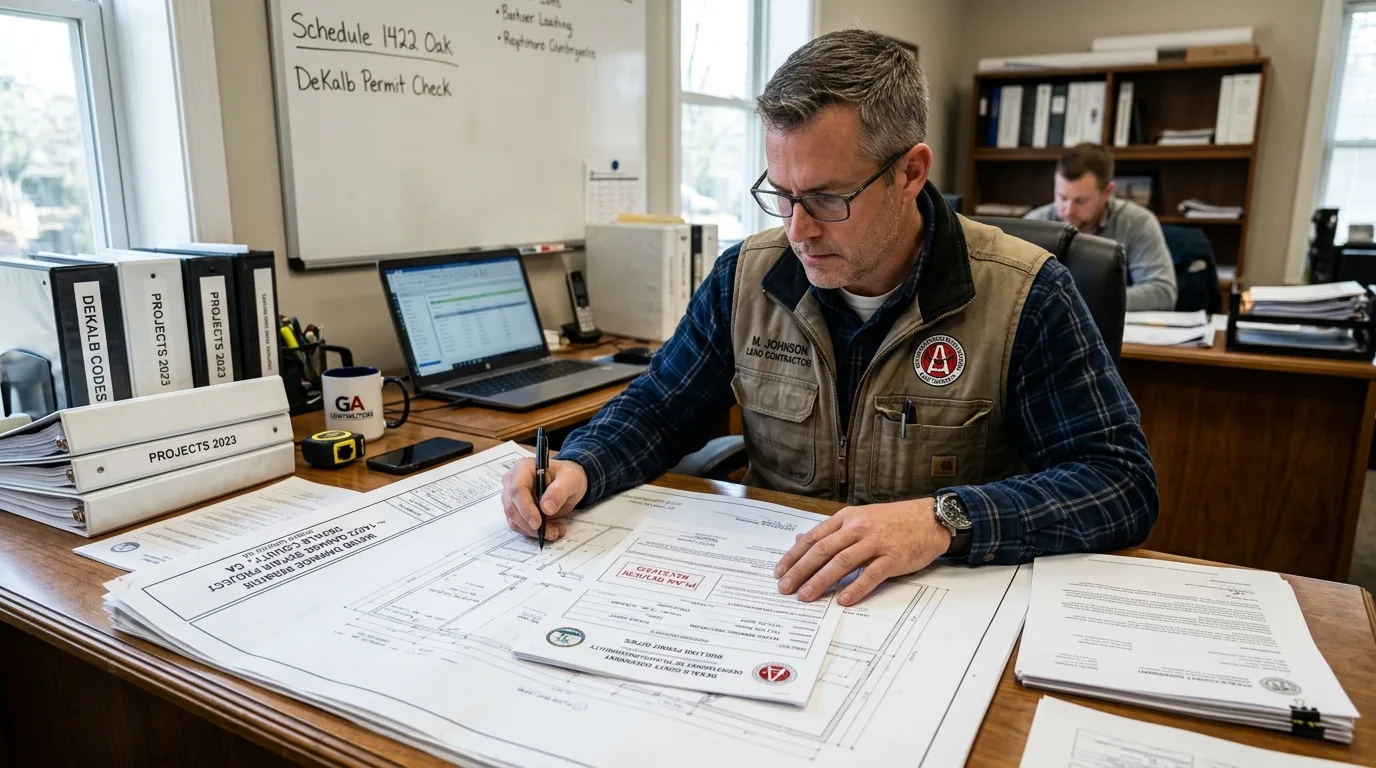
As of January 1, 2026, DeKalb County adopted the 2024 International Building Code — the first code update in several years — which affects what is required for permitted restoration work throughout Scottdale and the surrounding communities. For homeowners navigating a water damage restoration project, understanding exactly which work requires permits (and which does not) prevents delays, fines, and the complications that arise when unpermitted work is discovered at resale.
In this post, we cover which water damage restoration work requires DeKalb County permits, the permit application process and timeline, what the 2024 ICC adoption means for restoration projects, and how to coordinate permits through your contractor.
Permit Coordination for Your Scottdale Restoration?
We handle DeKalb County permit applications on your behalf. Call (877) 698-1311.
Why DeKalb County Permits Matter for Water Damage Restoration
Permits exist to ensure that repair work meets the building code standards that protect the occupants and future owners of a property. For water damage restoration specifically, the permit requirement serves two additional functions: it creates a public record that covered repairs were performed to code standard, and it triggers the inspection process that provides independent verification that work was done correctly.
The financial stakes are significant for Scottdale homeowners. Unpermitted structural or plumbing repairs discovered during a home sale inspection can stall or kill a transaction. More seriously, unpermitted work discovered during a future water damage event can affect insurance coverage for that subsequent claim — insurers may argue that the prior unpermitted repair contributed to the new damage. The permit fee is almost always a small fraction of the cost of these consequences.
Types / Options: What Requires a Permit in DeKalb County
Structural Repairs (Permit Required): Any work that involves repair, replacement, or alteration of structural elements — framing members, load-bearing walls, floor joist systems, roof sheathing — requires a building permit from the DeKalb County Permits, Plan Review & Inspections Division. Water damage frequently affects these elements, particularly after pipe bursts in wall cavities or crawlspace flooding that saturates floor joist systems.
Plumbing Repairs (Permit Required): Any plumbing repair beyond routine fixture maintenance requires a plumbing permit in DeKalb County. This includes replacing burst pipe sections, replacing water supply lines, and any drain line repairs. Plumbing permits can be pulled by licensed plumbing contractors or by the homeowner for owner-performed work. All licensed contractor work must be performed by a Georgia-licensed plumber.
Electrical Work (Permit Required): Water damage that affects electrical wiring, panels, or fixtures requires electrical permits for repair. This is common after flooding events where electrical circuits were submerged. All electrical work must be performed by a Georgia-licensed electrician or homeowner with appropriate inspection.
Cleanup, Drying, and Mold Remediation (No Permit Required): Water extraction, structural drying, dehumidification, mold remediation, antimicrobial treatment, and material removal for drying purposes do not require permits in DeKalb County. These activities are part of the mitigation scope and can begin immediately without waiting for permit issuance.
Drywall and Flooring Replacement (Generally No Permit Required): Cosmetic replacement of drywall, flooring, and non-structural finishes as part of restoration does not typically require a permit unless the work involves changes to wall configurations or structural elements.
Practical Uses: Navigating the DeKalb County Permit Process
- Apply early: The DeKalb County One-Stop permitting office at 178 Sams Street, Decatur, GA processes permits during business hours (8:30 AM to 4:00 PM, Monday through Friday). Online applications are available through the county’s ePermits portal — which accepts applications 24/7. Submit permit applications as early as possible in the restoration timeline, since permit processing takes 5 to 10 business days for standard residential permits.
- Request your permit application from your contractor: Professional restoration contractors familiar with DeKalb County should be able to apply for permits on your behalf under their contractor license. Ask specifically whether they handle permit applications as part of their restoration scope.
- Schedule inspections proactively: Required inspections — rough plumbing, framing, electrical — must be scheduled through the county and can take 1 to 3 business days for availability. Build inspection windows into the reconstruction timeline so they don’t become bottlenecks.
- Keep your permit copy on-site: DeKalb County requires that the issued permit be posted at the job site during active work. Keep a copy accessible for any inspector visits.
- Verify contractor licensing: All licensed trade contractors working on permitted restoration work in DeKalb County must hold current Georgia state licenses. Ask your restoration contractor to confirm that all tradespeople on the project are licensed for their respective scope.
How the 2026 ICC Code Update Affects Scottdale Restoration Projects
DeKalb County’s adoption of the 2024 International Building Code as of January 1, 2026 introduces updates to structural requirements, energy efficiency standards, and residential mechanical standards that can affect water damage restoration projects. The most significant change for restoration work involves updated moisture protection requirements for wall assemblies in climate zone 3 (which includes DeKalb County) — specifically, the requirements for vapor retarders and drainage plane materials in exterior wall assemblies being rebuilt after water damage.
For most Scottdale homeowners, the practical consequence is that wall assemblies rebuilt after water damage must now meet the 2024 code standard rather than the code in effect when the original home was built. This can affect material selection for reconstruction and may require specific vapor retarder products in exterior wall rebuilds. A restoration contractor familiar with the 2024 ICC requirements can advise on compliant material selection during the reconstruction planning phase.
Property Reconstruction in Scottdale — Permits Handled.
We coordinate all DeKalb County permits for your restoration project. Call (877) 698-1311.
Cost Factors: How Permits Affect the Restoration Budget
Permit fees in DeKalb County are based on the value of the permitted work. Standard residential permit fees typically run $100 to $500 for water damage restoration scope, with additional fees for trade permits (plumbing, electrical, mechanical). These costs are a minor component of the overall restoration budget, which averages $8,546 in the Atlanta metro area.
The more significant budget impact of permits is timing — the 5 to 10 business day permit processing window means that reconstruction cannot begin on permitted scope items until approval is received. Planning for this window from the start of the project prevents the frustration of having a dry, remediated structure sitting idle while permits process. We submit applications as early as possible in every project and coordinate the mitigation and reconstruction schedules to minimize idle time.
Frequently Asked Questions
Can I pull my own permits for water damage repairs on my Scottdale home?
Yes — Georgia allows homeowners to pull permits for work performed on their own principal residence. The homeowner must be performing the work themselves or directly supervising it; homeowners cannot pull permits for work performed by unlicensed contractors. The permit application is submitted to the DeKalb County Permits Division at 178 Sams Street, Decatur, or through the ePermits online portal. For complex structural or plumbing work, using a licensed contractor who pulls permits under their license is generally recommended.
What happens if I do restoration work without permits in DeKalb County?
Unpermitted work is subject to stop-work orders, fines, and required demolition and re-inspection. More practically, unpermitted work may need to be disclosed in a real estate transaction and can affect future insurance claims. The DeKalb County building department conducts periodic inspections and has authority to require that unpermitted work be exposed for inspection or removed. The cost of addressing unpermitted work after the fact is almost always greater than the cost of obtaining the permit before work begins. See our complete guide to water damage restoration in Scottdale for the full restoration process.
Does my insurance cover the permit fees for water damage restoration?
Permit fees for covered restoration work are generally included in the insured scope of a water damage claim. Your restoration contractor’s estimate should itemize permit fees as a line item, and your adjuster should include them in the approved claim scope. If permit fees are not included in the adjuster’s initial estimate, your contractor can provide supplemental documentation to add them. See our DeKalb County insurance claim guide for the full documentation process. For property reconstruction services, see our property reconstruction service page.
Permit Experts for Scottdale Water Damage Restoration
We know DeKalb County's permit process inside and out. Call (877) 698-1311 to get started.
Related: