Sewage Backup Cleanup in DeKalb County: Health & Safety
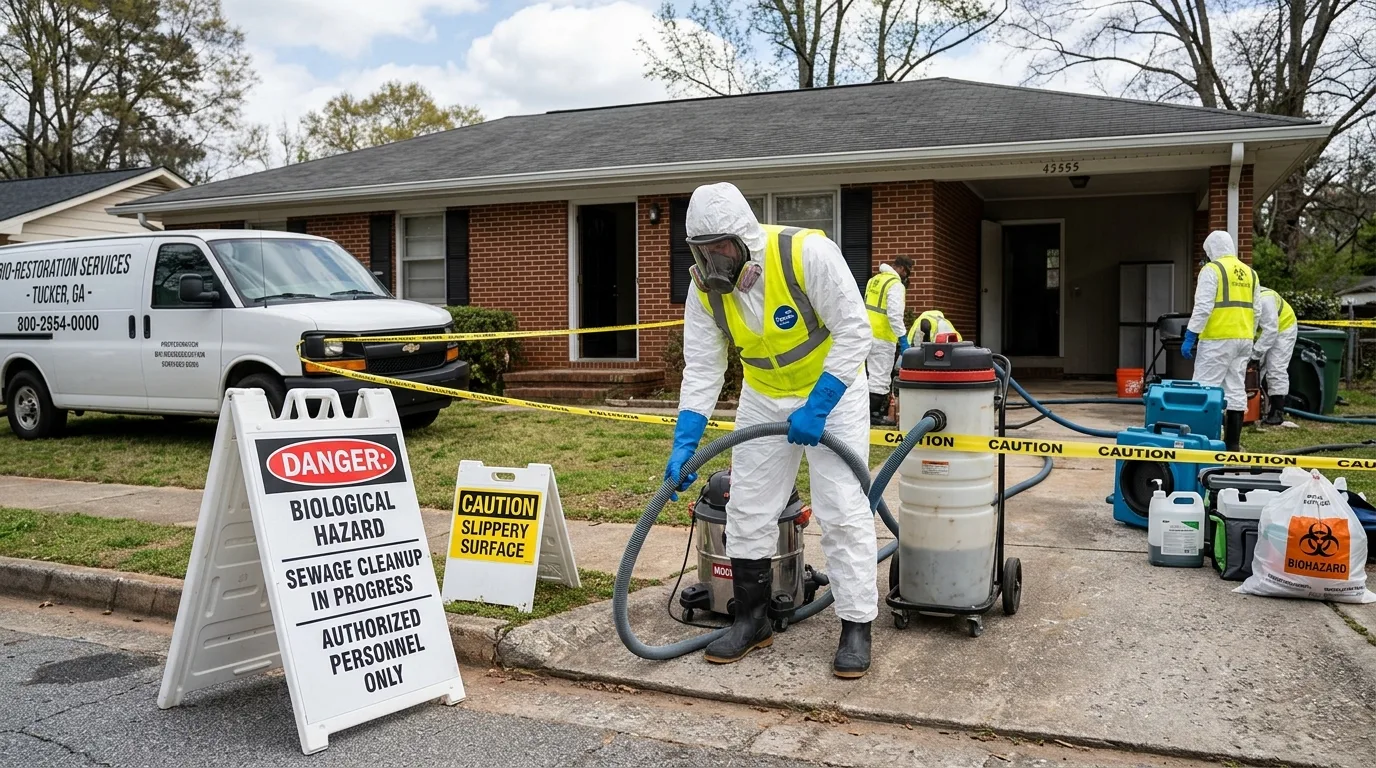
When a sewage backup event is properly remediated, the homeowner gets their home back, the health risk is eliminated, and the restoration moves forward. When it is not — when a homeowner attempts DIY cleanup or hires a contractor who does not follow Category 3 protocols — the result is persistent contamination, health consequences for occupants, and a remediation project that costs significantly more than if it had been done correctly the first time.
In this post, we cover what makes sewage backup a Category 3 biohazard event, the specific health risks it creates for DeKalb County families, what proper professional cleanup involves, and why spring storm season in Scottdale elevates sewage backup risk for certain neighborhoods.
Sewage Backup in Scottdale or DeKalb County?
Category 3 cleanup requires certified contractors — call (877) 698-1311 for safe immediate response.
Why Sewage Backup Is a Category 3 Biohazard in DeKalb County
The IICRC classifies water into three categories based on contamination level. Category 3 — which includes sewage backup — is the highest contamination designation, containing pathogenic bacteria, viruses, and parasites that pose direct health risks to occupants and cleanup personnel. Unlike Category 1 (clean water) or Category 2 (gray water), Category 3 events cannot be remediated without full personal protective equipment, controlled materials disposal, and thorough antimicrobial decontamination of all surfaces that sewage contacted.
Scottdale and DeKalb County face elevated sewage backup risk during heavy spring rainfall — particularly during the March through May storm season when annual precipitation peaks and municipal storm and sanitary sewer systems can become overwhelmed. In older sections of DeKalb County where combined storm and sanitary sewers share infrastructure, heavy rainfall events can push sewage retrograde through floor drains and toilets in homes connected to those systems. This is not a plumbing failure in the home — it is a consequence of the municipal system’s capacity being exceeded — but the cleanup requirements are identical regardless of the source.
Types / Options: Sewage Backup Scenarios
Municipal Sewer Backup: The most common sewage backup scenario in DeKalb County. Heavy spring rainfall overwhelms the capacity of municipal sewer infrastructure, causing sewage to back up through connected residential floor drains, sump pits, and toilets. Affects multiple properties simultaneously during significant storm events. Insurance coverage depends on whether you carry a sewage backup endorsement.
Private Drain Line Blockage: A blockage in the home’s private lateral line — the pipe connecting the home to the municipal main — causes sewage to back up into the lowest drain in the home. Typically affects a single property and is generally covered under homeowner’s policies when caused by a sudden pipe failure rather than gradual buildup.
Septic System Failure: Less common in Scottdale’s urban context but present in some DeKalb County properties with private septic systems. Septic overflow into the structure or onto the property constitutes a Category 3 event requiring full professional remediation.
Floor Drain Backup from Groundwater Event: During extreme spring flooding, groundwater infiltration can carry contamination from soil and near-surface organic material into the structure through floor drains. While not technically sewage, groundwater-sourced basement flooding should be treated as Category 2 at minimum and assessed for Category 3 indicators.
Practical Uses: What Safe Sewage Cleanup Requires
- Immediate evacuation of affected areas: No occupants — including pets — should remain in spaces affected by sewage backup until professional remediation is complete. Children and immunocompromised individuals are particularly vulnerable to the pathogens present in Category 3 water.
- Do not attempt DIY cleanup: Consumer-grade cleaning products and shop vacuums do not provide adequate decontamination for Category 3 events. Disturbing sewage-contaminated materials without proper containment releases aerosolized pathogens into the air throughout the home.
- Document before any cleanup begins: Photograph the full extent of sewage intrusion before professional contractors arrive. This documentation is essential for the insurance claim and the contractor’s scope determination.
- Remove all food and food preparation materials from affected areas: Any food, food preparation surfaces, utensils, or dishware in sewage-affected spaces must be discarded — they cannot be safely decontaminated.
- Keep air handling off: HVAC operation during sewage cleanup can distribute contaminated air and aerosolized pathogens throughout the home. Do not run the air handler until the remediation contractor has assessed the impact on the HVAC system.
How It Works: Professional Category 3 Sewage Cleanup
Professional sewage backup cleanup begins with personal protective equipment deployment — full Tyvek suits, N95 respirators or P100 half-face respirators, chemical-resistant gloves, and eye protection for all technicians. This is not optional; it is a standard requirement under IICRC S500 Category 3 protocols.
Containment is established before any sewage-contaminated materials are disturbed. Negative air pressure HEPA containment barriers prevent cross-contamination to unaffected areas of the home during the removal process. All porous materials that contacted sewage — drywall, carpet, pad, insulation, wood materials that cannot be effectively decontaminated — are removed in sealed bags under containment and disposed of according to applicable regulations.
Remaining structural surfaces receive thorough antimicrobial treatment with EPA-registered Category 3 decontamination products. Dehumidification begins after decontamination to prevent mold development in the drying environment. Post-remediation testing confirms that contamination levels have returned to safe standards before reconstruction proceeds.
Category 3 Sewage Cleanup in Scottdale — Do It Right.
Our team is IICRC-certified for Category 3 events. Call (877) 698-1311 for safe, immediate response.
Cost Factors for Sewage Cleanup in Scottdale
Sewage backup cleanup is consistently at the higher end of the water damage restoration cost range — $16.65 per square foot for black water events versus $7.77 for clean water. In the Atlanta metro market, Category 3 sewage events typically run $3,000 to $12,000 for the cleanup phase depending on the volume of sewage, the area affected, and the extent of materials requiring removal. The full project including decontamination, structural drying, and reconstruction averages $8,546 to $15,000 for typical residential events.
Insurance coverage for sewage backup depends on your specific policy. Standard homeowner’s policies in Georgia often exclude sewage backup or limit coverage to a sublimit — check your policy for “water backup” or “sewer backup” coverage. A sewage backup endorsement, typically adding $50 to $100 per year to your premium, provides full coverage and is strongly recommended for DeKalb County homeowners in areas with older municipal sewer infrastructure. Our team assists with insurance documentation for all covered sewage backup events.
Frequently Asked Questions
Is sewage backup in my Scottdale home covered by homeowner’s insurance?
Standard Georgia homeowner’s policies often exclude or sublimit sewage backup coverage — it is frequently excluded from the base policy and available only as a separate endorsement. Review your policy specifically for language about “water backup,” “sewer backup,” or “drain backup” coverage. If this endorsement is absent, a sewage backup event will likely be an out-of-pocket expense. Adding the endorsement before an event costs $50 to $100 per year. See our insurance claim filing guide for DeKalb County homeowners for help navigating the claims process.
How long does sewage backup cleanup take in DeKalb County?
Professional sewage backup cleanup typically takes 3 to 7 days for the remediation phase — including extraction, materials removal, decontamination, and initial drying. Post-remediation verification testing adds 1 to 2 days. Reconstruction of removed materials follows and adds 1 to 4 weeks depending on scope. DeKalb County permits for structural and plumbing repairs are required and should be applied for at the start of the reconstruction phase. See our permit guide for DeKalb County water damage repairs for the full process.
What if my neighbor also had a sewage backup during the same storm — does that affect my claim?
When multiple properties experience sewage backup during the same storm event, it indicates a municipal system capacity failure rather than a private property issue. This distinction matters for claims — municipal system failures may support a claim against the county’s infrastructure authority if negligence can be demonstrated, in addition to whatever coverage your private policy provides. Document the timing of the event, confirm with neighbors whether they experienced the same issue, and report the event to DeKalb County’s public works department. Our DeKalb County spring storm flood prevention guide covers the broader storm event context.
Sewage Backup Is an Emergency — Call Now
Scottdale Water Damage provides 24/7 Category 3 cleanup. Call (877) 698-1311 for immediate safe response.
Related: