5 Signs of Hidden Water Damage in Your Scottdale Home
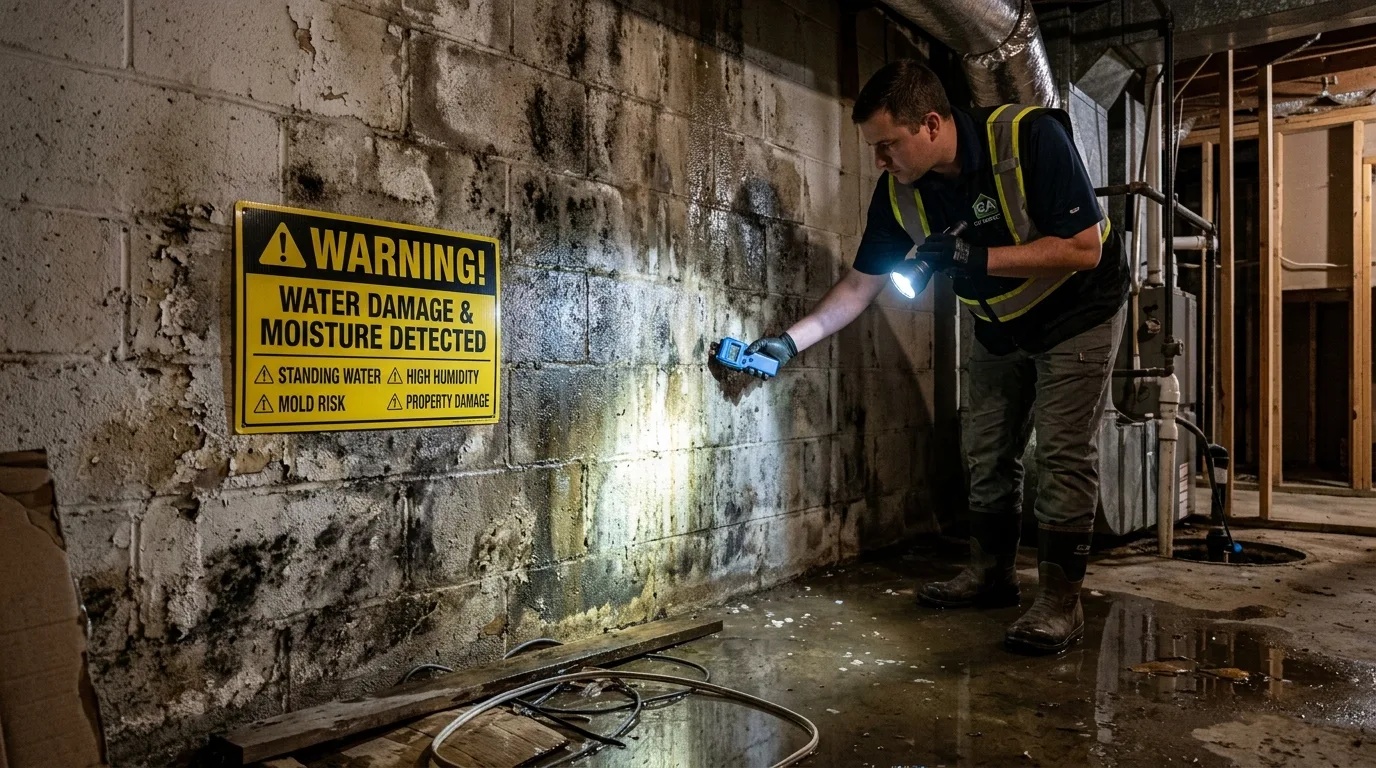
Your Scottdale home might have a water damage problem right now — and you’d never know it by looking at the walls. Water that enters through a slow pipe leak, a roof penetration, or a crawlspace breach doesn’t announce itself. It moves silently through insulation, behind drywall, and beneath flooring for weeks or months before the visible consequences arrive — by which point the structural damage and mold colonization are often far more extensive than the original intrusion.
In this post, we cover the five warning signs that experienced water damage contractors look for in Scottdale homes, why Scottdale’s January-through-April weather creates peak hidden damage conditions, when to call for a professional inspection, and what to expect from the assessment process.
Suspect Hidden Water Damage in Your Scottdale Home?
A thermal imaging inspection reveals moisture invisible to the naked eye. Call (877) 698-1311.
Why Hidden Water Damage Is a Particular Risk in Scottdale
Between January and April, Scottdale’s weather creates two distinct hidden water damage mechanisms that operate simultaneously. January and February bring the freeze-thaw cycles — when overnight lows approach the average 35°F and pipes in uninsulated exterior walls or crawlspace-adjacent spaces contract, crack, and release water into the wall cavity before the homeowner is aware of the failure. Then March through April transitions into Georgia’s tornado and thunderstorm season, when heavy rainfall events drive water through roof vulnerabilities, window gaps, and foundation cracks before surface drainage can redirect it.
The result is that many Scottdale homeowners discover water damage not because they saw water entering but because they notice one of the five signs below weeks or months after the original intrusion. By that point, mold remediation is often necessary in addition to structural repairs — adding significantly to the total restoration cost.
The 5 Warning Signs of Hidden Water Damage
Sign 1 — Musty Odor Without a Visible Source: A persistent earthy or musty smell in a specific room, coming from a floor vent, or concentrated in a lower-level space is one of the most reliable early indicators of mold growth. Mold in Scottdale’s humid climate can begin colonizing inside wall cavities within 24 to 48 hours of water intrusion — long before any visible growth appears on the surface. If a musty odor in your home doesn’t respond to cleaning or ventilation, it’s coming from somewhere you can’t see.
Sign 2 — Bubbling, Peeling, or Stained Paint or Wallpaper: Paint that bubbles, peels, or develops yellowish staining on ceilings or walls indicates moisture migration through the surface material. This is almost always a sign of water that has been present in or behind the wall assembly for an extended period. In Scottdale homes, this commonly occurs on exterior walls adjacent to gutters that have failed or on ceilings beneath bathrooms on the floor above.
Sign 3 — Soft, Warped, or Buckled Flooring: Hardwood floors that cup, bow, or develop soft spots, LVP that separates at the seams, and tile that sounds hollow when tapped are all signs of moisture accumulation in the subfloor beneath. This is particularly common in Scottdale homes after a slow appliance leak or following a crawlspace moisture event — the water extraction and structural drying required must address the subfloor, not just the surface material.
Sign 4 — Unexplained Increases in Water Bills: A water bill that rises without a corresponding change in usage — particularly if the increase appears gradually over several months — often indicates a slow leak somewhere in the plumbing system. Burst pipe repair statistics show that these slow leaks frequently originate in supply lines behind walls, under slabs, or in crawlspace-exposed plumbing runs. The water from these leaks saturates surrounding materials slowly but continuously.
Sign 5 — Visible Efflorescence or Staining on Foundation Walls: White, chalky mineral deposits on basement or crawlspace foundation walls are called efflorescence — they form when water moves through the concrete, dissolves minerals, and deposits them on the surface as it evaporates. Efflorescence is a direct indicator of water migrating through the foundation. In Scottdale’s red clay soil environment, this is often driven by hydrostatic pressure from clay that remains saturated against the foundation for days after rainfall.
One of These Signs in Your Scottdale Home?
Don't wait for visible mold — call (877) 698-1311 for a professional hidden moisture inspection.
Types / Options: What a Professional Hidden Damage Inspection Finds
Thermal Imaging: Infrared cameras detect temperature differentials caused by evaporating moisture — revealing wet wall cavities, saturated subfloor layers, and damp insulation that appear completely normal on the surface. This is the primary tool used to map hidden moisture in Scottdale homes after a suspected intrusion event.
Pinless Moisture Meters: Non-invasive meters read moisture content through finished surfaces without requiring holes in the drywall. They provide quantitative moisture readings that confirm whether materials have returned to acceptable levels or still hold damaging moisture.
Pin-Type Meters: Used to take precise readings inside specific materials by inserting pins into the surface. More accurate than pinless meters for confirming exact moisture content in structural materials that must meet IICRC dry targets before reconstruction.
Borescope Inspection: A small camera inserted through a small drilled hole allows direct visual inspection of wall cavities and inaccessible spaces without significant demolition. Used when thermal imaging indicates a suspect area but pinless meters cannot confirm the finding.
How It Works: What Happens After Hidden Damage Is Found
After a hidden moisture inspection identifies affected areas, the next step is determining the scope of required remediation. If dehumidification equipment placed early can address the moisture without materials removal, the structural drying process begins immediately — industrial air movers and commercial dehumidifiers running continuously until all readings reach IICRC targets.
If the moisture has been present long enough for mold to colonize, or if affected materials have saturated beyond drying viability, controlled demolition to access the affected cavity is necessary. Wall sections are opened, wet materials are removed, the cavity is treated with EPA-registered antimicrobials, and the space is dried before reconstruction. The discovery-to-completion process typically runs 7 to 14 days for a contained hidden damage event.
Throughout every phase, photographic and moisture-reading documentation is compiled for the insurance claim. Hidden damage discovered as a result of a sudden and accidental event — a pipe burst or storm intrusion — is generally covered under standard homeowner’s insurance policies in Georgia.
Cost Factors for Hidden Water Damage Remediation in Scottdale
Atlanta metro water damage restoration averages $8,546 with a range of $1,874 to $15,960. For hidden damage events, the specific cost drivers are how long the moisture was present (longer = more extensive mold and structural damage), the number of areas affected, the water category, and whether mold remediation is required in addition to drying and reconstruction.
DeKalb County permit fees apply to structural repairs and plumbing work. The earlier hidden damage is caught, the lower the remediation cost — a slow leak discovered at the efflorescence stage is far less expensive to address than the same leak discovered after the floor above the crawlspace has softened from subfloor saturation.
Frequently Asked Questions
How do I know if my Scottdale home had a slow leak I missed?
The five signs above are the most reliable indicators. If you’re moving into a home or have recently experienced unusual utility bill increases, a professional crawlspace and attic inspection — which includes moisture meter readings in all accessible structural areas — can provide a baseline assessment. Homes in Scottdale’s Scottdale Mills Village historic district, built between 1900 and 1915, often have aging plumbing that is more prone to slow leaks than modern supply lines.
Can hidden water damage affect my home’s sale in Georgia?
Yes — Georgia requires material disclosure of known water damage on seller’s disclosure forms. Undisclosed water damage discovered during a buyer’s inspection can result in renegotiated prices, deal cancellations, or post-sale legal liability. A professional remediation with written documentation — moisture readings, scope of work, and completion verification — is the appropriate way to disclose a resolved water damage event during a real estate transaction. See our complete guide to water damage restoration in Scottdale for the full process.
Should I check for hidden water damage before every winter in Scottdale?
A pre-winter inspection of crawlspace moisture levels, visible pipe insulation in unheated spaces, and attic ventilation adequacy is a sound annual practice for any Scottdale homeowner. The freeze-thaw cycles that drive burst pipe events are most likely when temperatures drop toward the January average low of 35°F — catching vulnerable conditions before a pipe fails costs far less than addressing the water damage afterward. Read our winter burst pipe guide for Scottdale homeowners for preparation steps.
Don't Wait for Visible Damage to Act
Scottdale Water Damage provides hidden moisture inspections with thermal imaging. Call (877) 698-1311.
Related: